
Solutions
Outdoor TVs & Weatherproof Displays
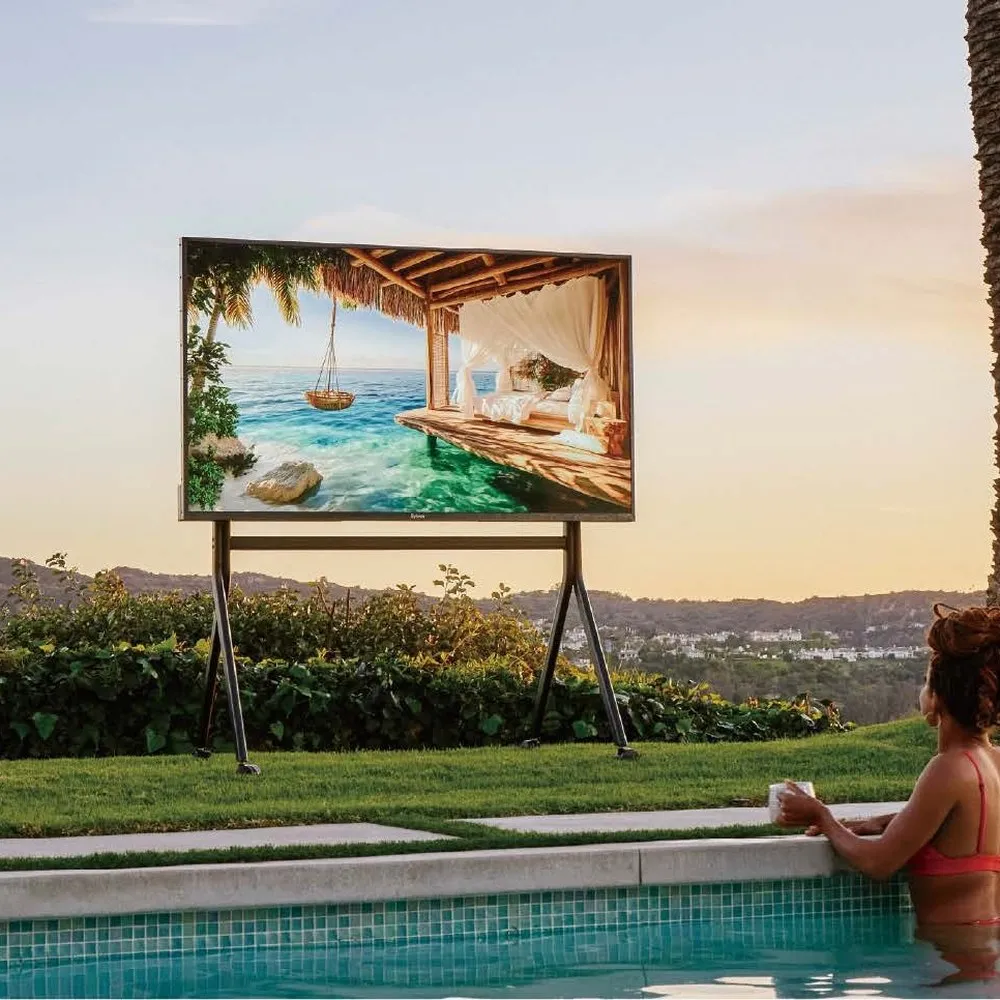
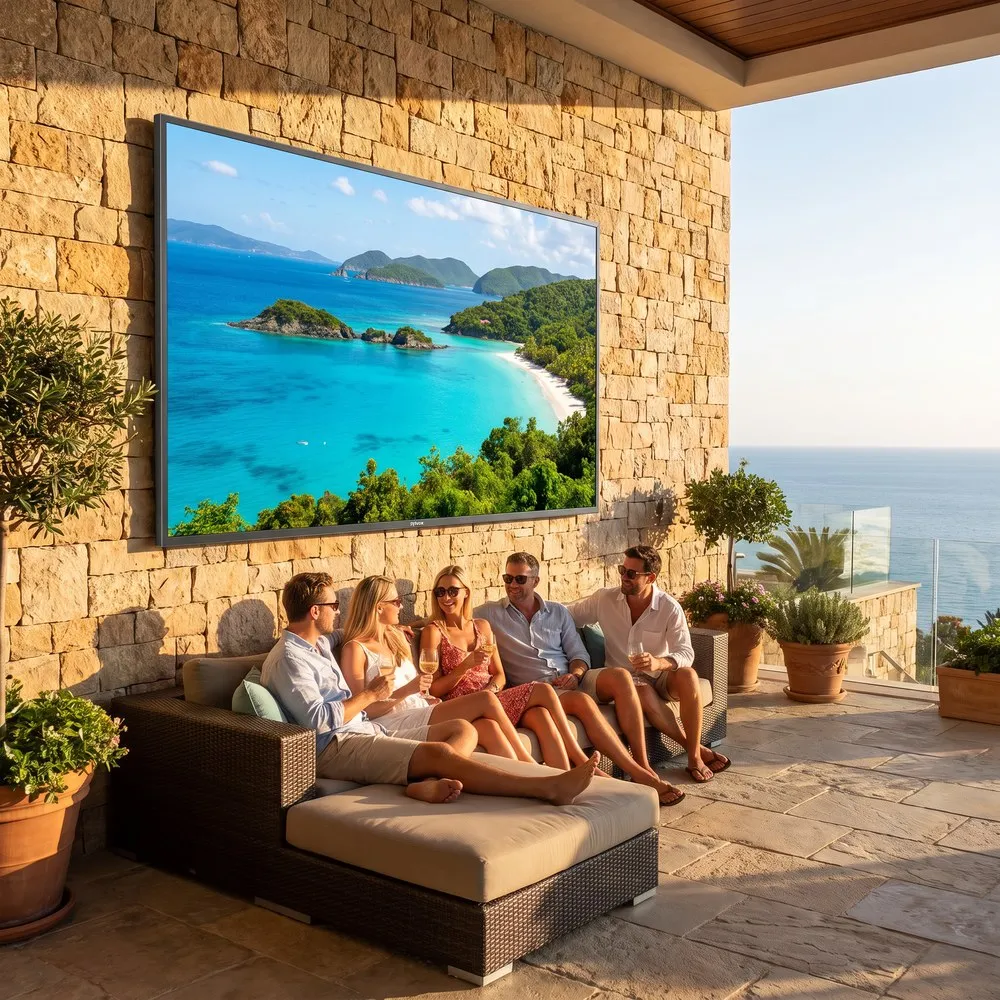
Televisions engineered to be mounted outside and left there — IP-rated sealed metal bodies with Google TV built in, from 1,000-nit screens for shaded alfresco areas to 5,000-nit full-sun panels up to 110 inches.
A screen that is simply always there
Everything else we build is an event. A screen goes up, an audience arrives, the screen comes down. An outdoor television is the opposite proposition: it is mounted once and it is on whenever someone wants it — the Saturday game on the terrace, the kids’ movie by the pool, the racing in the members’ area, a film after dinner without anyone touching a projector.
That “always there” quality is the whole value, and it is also why the specification has to be right. A television mounted outdoors is exposed to weather twenty-four hours a day for years, and it is fighting daylight rather than working in a darkened room. Both problems have real engineering answers, and both are routinely fudged by products marketed as “outdoor TVs” that are simply indoor panels in a slightly tougher shell.
The two decisions that matter
Everything else is detail. Get these two right and the screen works for a decade.
1. Where does the sun land?
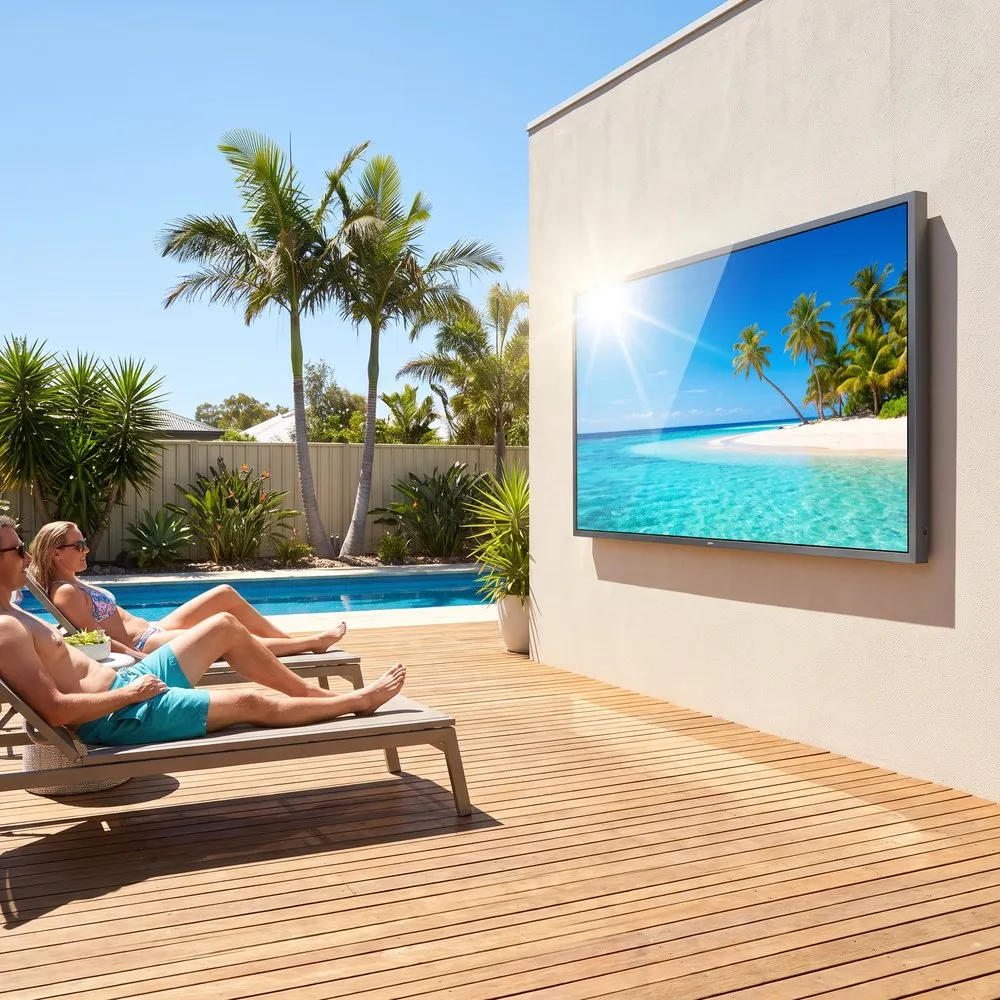
Brightness is measured in nits. Your living-room television is around 300–400. Ambient daylight is 10,000–25,000 lux, and it does not care how good the panel is — it will wash out anything that cannot fight back.
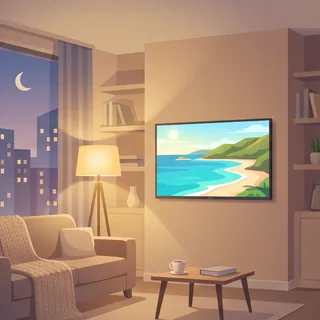
Indoors
Living room — no daylight reaching the screen
300–400 nits
The benchmarkA standard indoor TV
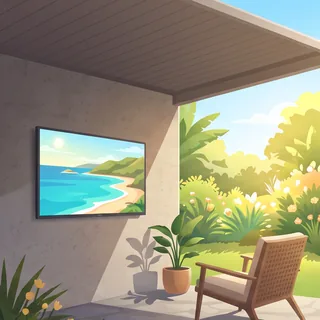
Covered or partial sun
Alfresco, verandah or courtyard — bright, but the screen stays shaded
~1,000 nits
≈3× an indoor TVPorch Pro, 43–75"
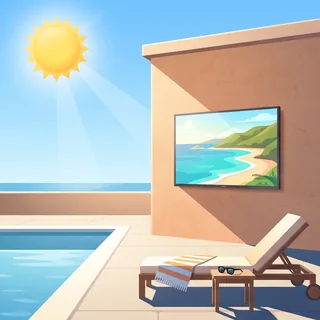
Full sun
Direct sun lands on the screen for part of the day
3,500–5,000 nits
≈10–15× an indoor TVCinema Pro, 65–110"
The honest version: if the sun reaches the screen, a 1,000-nit television will disappoint you and no amount of contrast adjustment fixes it. If it never does, paying for 5,000 nits is money you could have spent on a bigger screen or better sound.
2. How exposed is the position?
Ingress protection ratings tell you what the chassis will survive. First digit dust, second digit water.
- IP55 — dust protected, low-pressure water jets. Fine under an eave or overhang.
- IP56 — dust protected, high-pressure water jets. Suits exposed positions, coastal salt air, and anywhere that gets hosed down.
- IP65 — fully dust tight plus water jets. What we specify for outdoor audio.
None of these are “weather resistant” marketing terms — they are tested ratings, and a supplier who will not quote one is telling you something.
Indoor TV, TV in an enclosure, or a purpose-built outdoor TV?
These are the three ways people end up with a screen outside. The enclosure — a lockable box with a clear front window that an indoor TV sits inside — looks like the sensible middle ground, and it does solve theft. But it can’t make the panel any brighter, and a sealed box creates its own heat and condensation problems.
- No: Bright enough for daylight300–400 nits
- No: Tested water & dust ratingNo rating
- No: Handles heatNot built for sun
- No: Keeps condensation outVented housing
- Partly: Clear view of the pictureGlossy glare
- No: Theft protectionNone
- Yes: Slim, tidy installSlim
- No: Made for outdoor useOften outside warranty
- Upfront costLowest
- No: Bright enough for daylightDimmer behind glass
- Partly: Tested water & dust ratingDepends on the seals
- No: Handles heatTraps heat
- No: Keeps condensation outTraps moisture
- No: Clear view of the pictureExtra pane of glass
- Yes: Theft protectionLockable box
- No: Slim, tidy installBulky box
- No: Made for outdoor useStill an indoor TV
- Upfront costLow to mid
- Yes: Bright enough for daylight1,000–5,000 nits
- Yes: Tested water & dust ratingIP55 / IP56
- Yes: Handles heat−30°C to 50°C
- Yes: Keeps condensation outSealed chassis
- Yes: Clear view of the pictureNothing in front
- Yes: Theft protectionRear lock (Porch Pro)
- Yes: Slim, tidy installUnder 9cm deep
- Yes: Made for outdoor useBuilt for it
- Upfront costHighest
If the screen is only ever used after dark under a deep roof, an enclosure can get you by. If it has to work in daylight, or survive years of Australian summers without attention, only the right-hand column does the job.
What we supply
The Sylvox range covers both ends of the brightness decision with the same sealed metal construction, Google TV on the panel and Australian plug and tuner support throughout:
- Porch Pro (43”–75”) — 1,000 nits, IP56, 4K UHD, with a rear anti-theft lock that makes it specifiable for holiday parks, camp kitchens and club terraces.
- Cinema Pro (65”–86”) — 3,500–5,000 nits of Helio QLED with local dimming, 120Hz, Dolby Vision and 60W of built-in audio. The full-sun answer, and fast enough for live sport.
- Cinema Pro 110” — the largest outdoor television made, at 2.47m wide and 105kg. An engineered install, quoted per site.
- Elf S2 outdoor soundbar — IP65, 120W peak, HDMI ARC so one remote runs both.
Where this fits against the rest of our range
We are not going to sell you a television when you need a cinema screen. The crossover is around 2.5 metres of picture width:
- Under 2.5m of picture — an outdoor TV wins comfortably. One sealed panel, a smart platform built in, one power lead, a wall bracket. Nothing to set up, nothing to pack down.
- Over 2.5m, permanent — outdoor LED. Brighter again at 7,000 nits, IP69K, integrated DSP audio and cloud content control, engineered and certified as infrastructure.
- Over 2.5m, occasional — inflatable or fast-fold projection. Far more screen per dollar after dark, packed away between events.
Plenty of our clients end up with both: a permanent outdoor TV on the terrace for everyday use, and an inflatable screen in the shed for the two or three big nights a year.
Tell us about the position
Send us a photo of where the screen goes, which way it faces, and roughly where people will sit. We will tell you which line you need — including when the cheaper one is the right answer — and quote the screen, the matched mount, audio and installation together.
Built for outside from the start
What "outdoor" actually has to mean
Weatherproofing keeps a television alive outside. Brightness is what makes it watchable. A purpose-built outdoor TV has to do both, every day, without anyone packing it away.
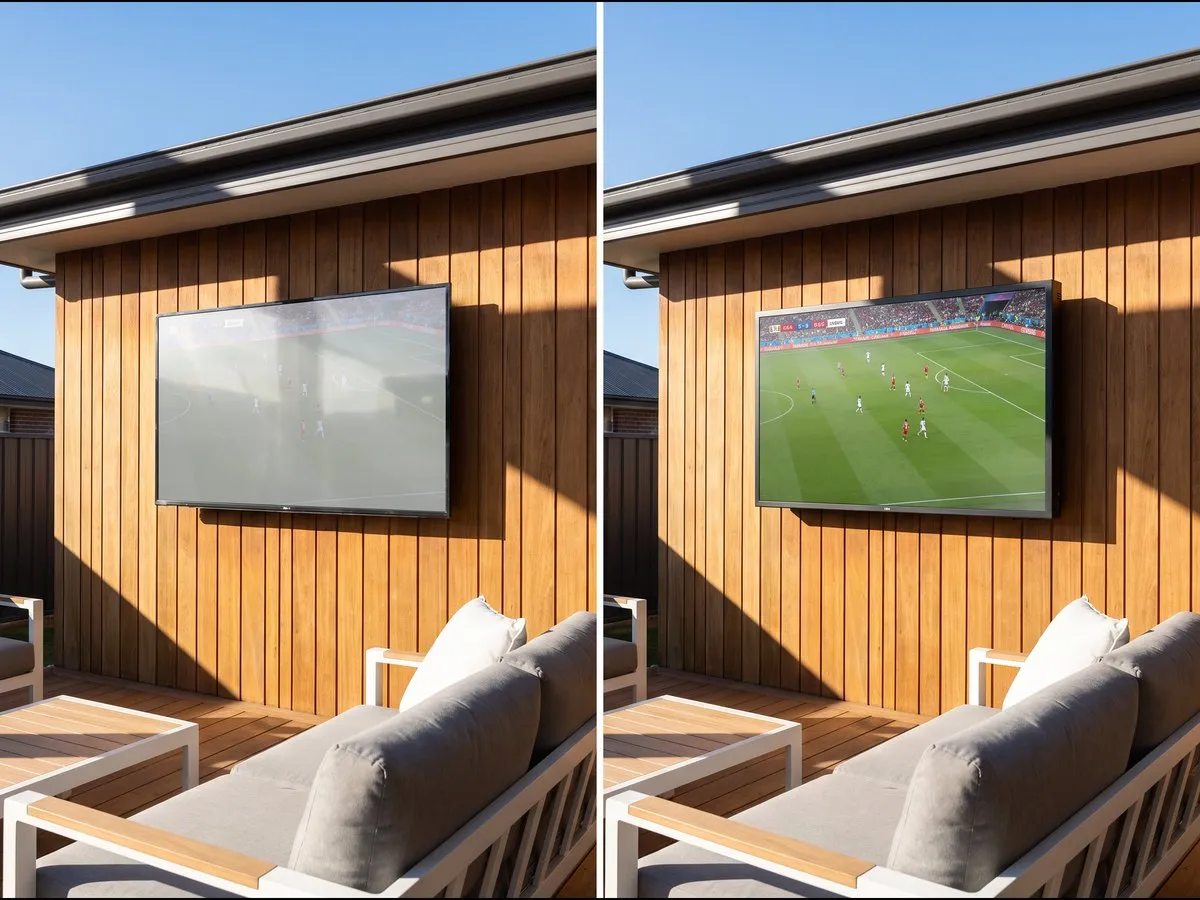
The sun test an indoor TV can't pass
The same wall, the same match, the same afternoon sun (an illustration, not a photograph). On the left, a typical indoor television at 300–400 nits: the picture sinks into grey behind a sheen of reflected sky. On the right, an outdoor TV built for daylight holds contrast and colour in the same light. No picture setting closes that gap — only more light from the panel does.
- Porch Pro — 1,000 nits for shaded and partly-sunny positions
- Cinema Pro — 3,500–5,000 nits for direct sun on the screen
- Roughly 3× to 15× the light of a typical indoor TV
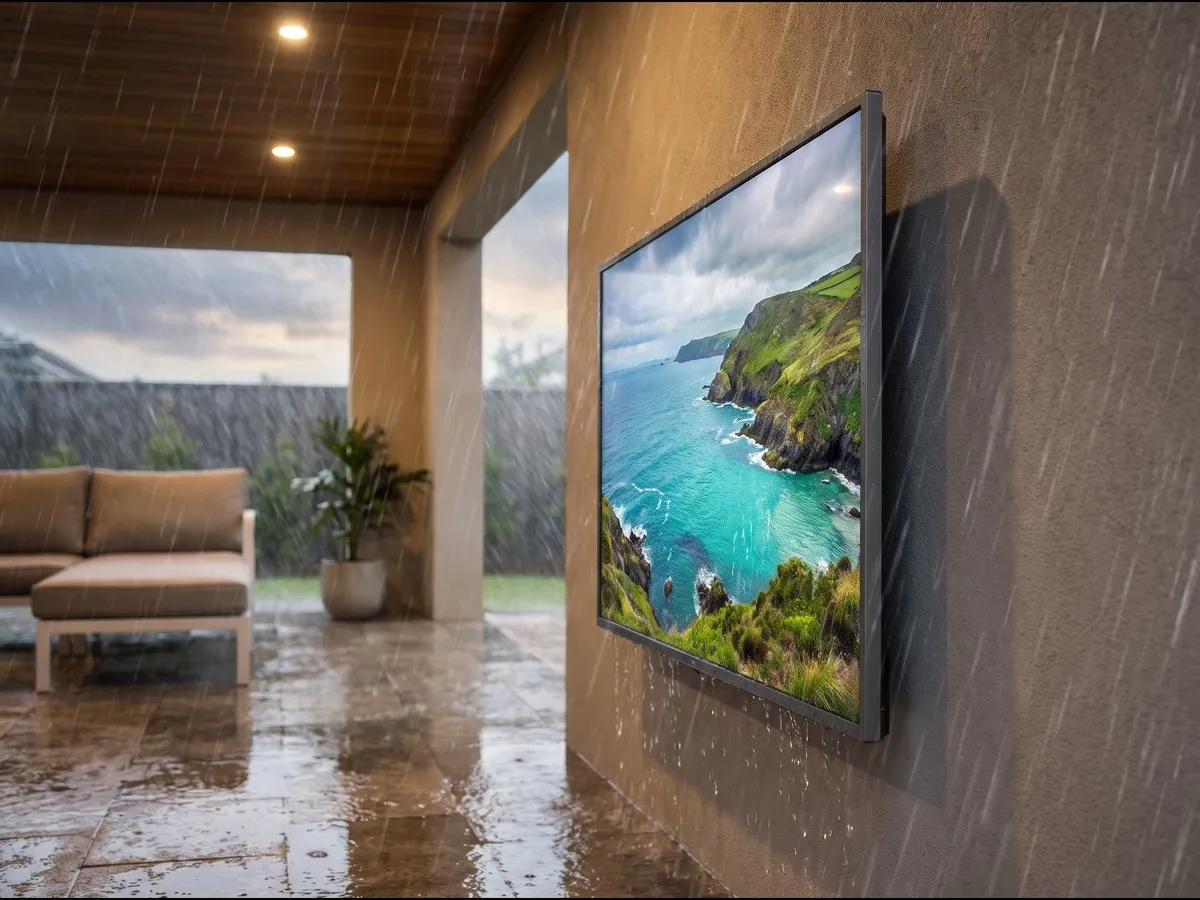
Mounted in the weather, not hiding from it
A purpose-built outdoor TV is meant to stay on the wall through a southerly change, a tropical downpour or a hose-down at close. The chassis is sealed and rated as one unit, so there's no box to fit, no seals to maintain and nothing to cover before a storm (illustration).
- Rated IP55 (Cinema Pro) and IP56 (Porch Pro) — dust and water jets
- Rated for −30°C to 50°C on the Porch Pro
- A fitted cover is included, but only for long shutdowns
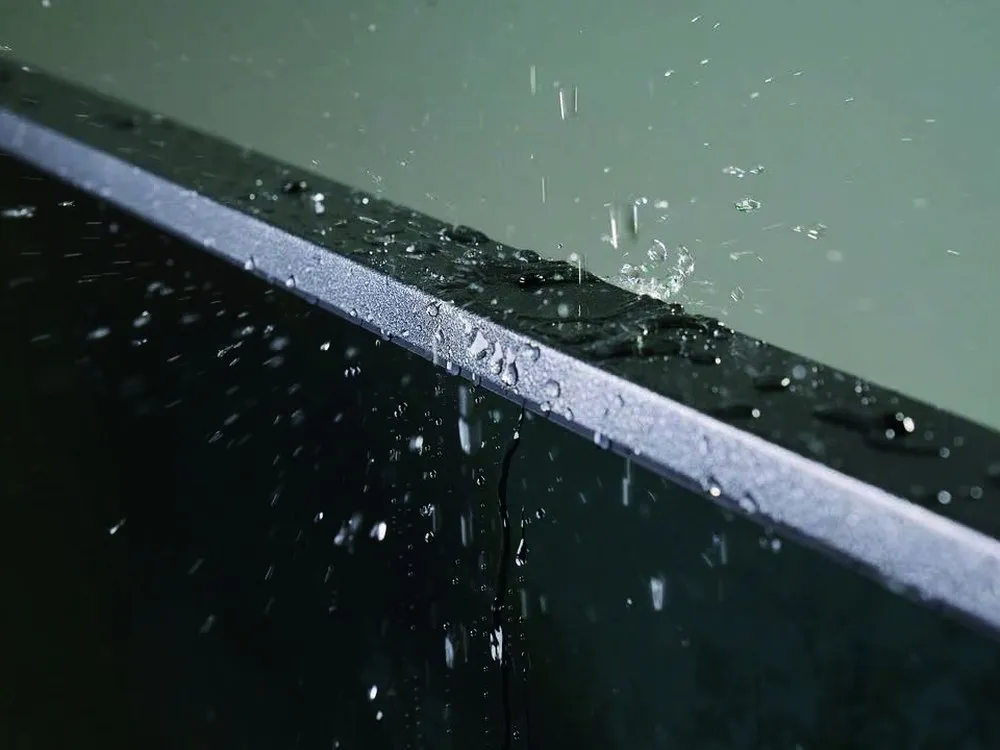
Sealed, not vented
Indoor televisions breathe through vents because they're designed for conditioned indoor air. Outside, those vents let in humid air that condenses inside the panel overnight, along with dust, insects and salt. The Sylvox range uses a sealed metal chassis with water beading off the frame rather than running into it.
- Sealed metal chassis — no vents for moisture or insects
- Corrosion resistant for coastal and poolside positions
- Under 9cm deep — sits tight to the wall on a fixed bracket
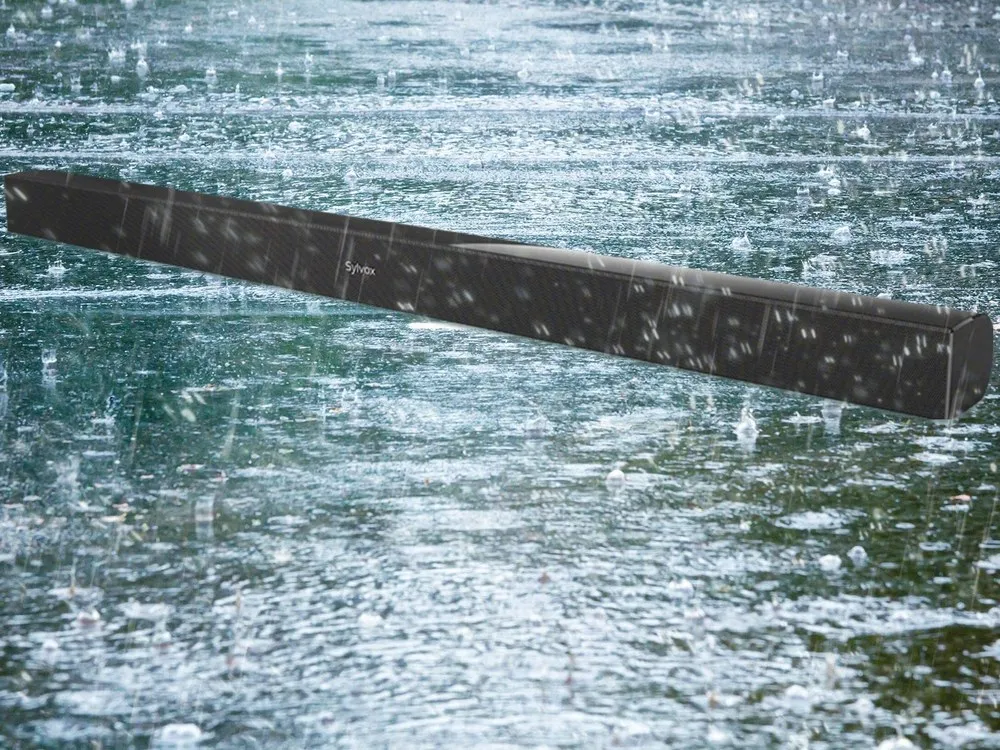
The sound is rated for the weather too
A weatherproof screen with an indoor soundbar under it just moves the weak point. The Elf S2 outdoor soundbar is IP65 — fully dust tight and rated against water jets — and connects over HDMI ARC so the TV remote runs both.
- IP65 outdoor soundbar, wall-mountable under the screen
- 120W peak, 2.0 channel, four EQ modes
- HDMI ARC — one remote for TV and sound
Frequently asked questions
- Can't I just put a normal TV under a covered patio?
- People do, and it usually lasts a season or two. An indoor television has a vented plastic housing designed to breathe conditioned indoor air. Outside, humidity condenses inside the panel, insects nest in the vents, UV yellows and embrittles the housing, and the brightness was never intended to compete with daylight. A purpose-built outdoor TV is a sealed metal chassis rated for water and dust ingress, with two to fifteen times the brightness. It is also worth checking whether your home and contents policy covers an indoor appliance installed outdoors.
- How many nits do I actually need?
- It depends entirely on whether direct sun reaches the screen. For a covered alfresco area, verandah or shaded courtyard, 1,000 nits is right and anything more is wasted money. For a position where sun lands on the screen at any point in the day — a north-facing pool deck, a rooftop terrace, an unshaded sports viewing area — you need 3,500 nits or more, and the honest answer is that nothing cheaper will work. A typical indoor television is 300–400 nits.
- What do the IP ratings mean here?
- The first digit is dust, the second is water. IP55 is dust protected and rated against low-pressure water jets; IP56 adds high-pressure jets; IP65 is fully dust tight. For an outdoor television under an eave, IP55 is sufficient. For a fully exposed position, coastal salt air or anywhere that gets hosed down, look for IP56 or better. All the screens we supply are rated for permanent outdoor mounting rather than "weather resistant".
- At what size should I stop looking at TVs and start looking at LED?
- Around 2.5 metres of picture width. Below that, an outdoor TV is dramatically better value — it is one sealed panel with a smart platform built in, a single power lead and a wall bracket. Above it, LED is the only sensible answer, and it brings integrated audio, cloud content control, IP69K weatherproofing and a 100,000-hour panel life. Our 110" screen and our 3m LED screen sit either side of that line.
- Do you install, or just supply?
- Both. Most residential screens ship and are installed by a local mount specialist or the client's own trades, and we supply the matched bracket and spec the position. For venues, holiday parks, clubs and commercial sites we scope and quote mount, power, data, audio and installation as one package. Anything over about 60kg — the 86" and the 110" — we recommend we handle.
- What about sound?
- Built-in speakers run from 2 × 10W on the Porch Pro to 60W with a subwoofer on the Cinema Pro. The Cinema Pro's audio genuinely covers a domestic terrace on its own. Beyond that, an IP65 outdoor soundbar over HDMI ARC keeps it to one remote, and for venue crowds or noisy sites we spec weatherproof CF-series speakers on amplification.
Outdoor TVs & Weatherproof Displays range
View all products →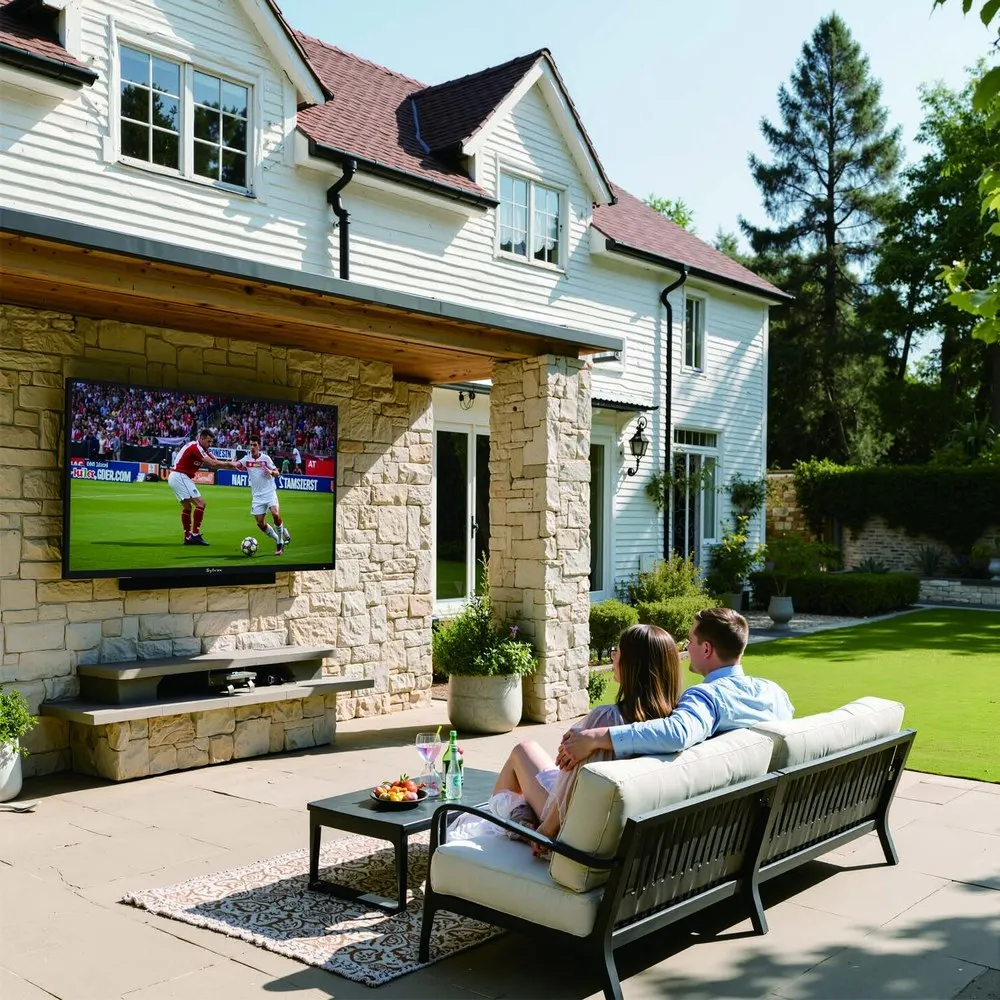
Planning an outdoor screen or LED installation?
Tell us about your site and audience. We scope, supply and support outdoor cinema and permanent LED systems Australia-wide.