
Solutions
Rear Projection Window Film
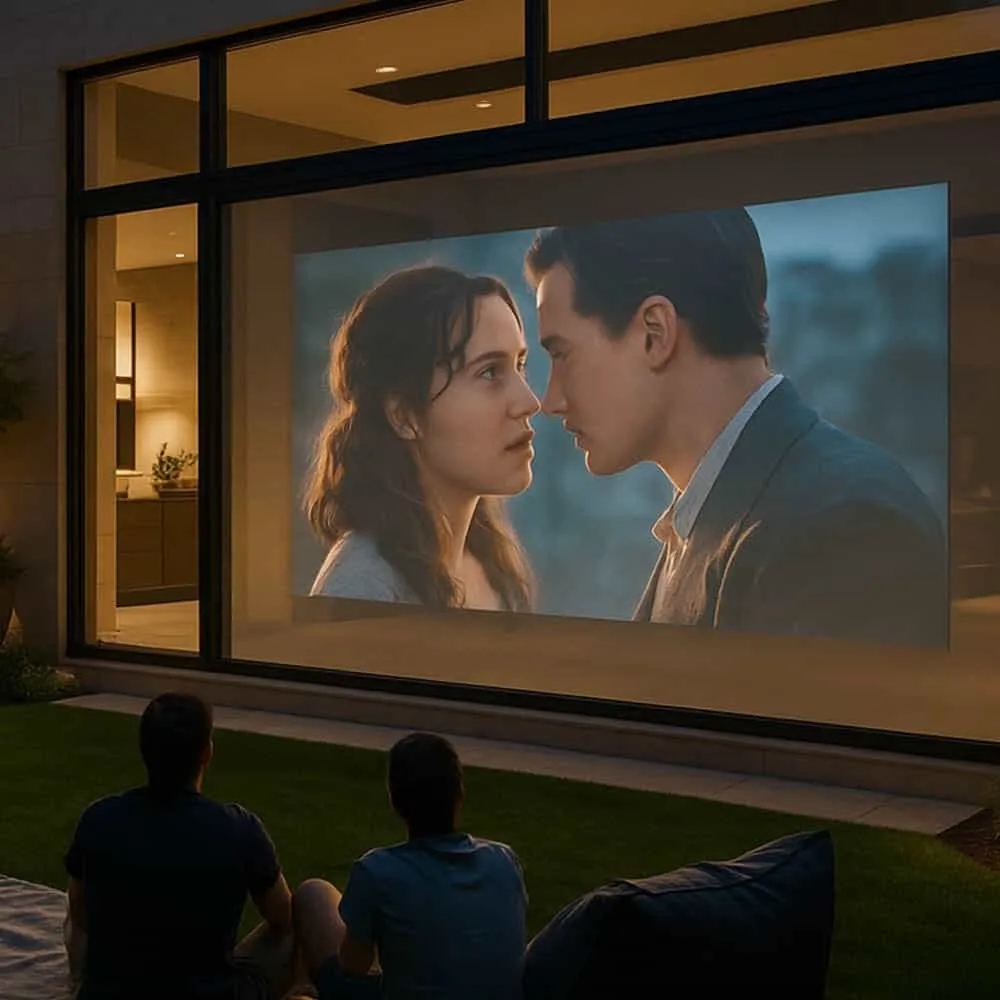
Translucent film that turns flat glass into a screen. Project from behind the glass, keeping the projector indoors, protected and out of sight.
Turn any window into a screen
Rear projection film is a translucent layer applied to flat glass that lets a projector sit safely behind the window and throw its image forward — clearly visible outside even in varied lighting. It’s used in museums, galleries, shopfronts, homes and outdoor cinema setups.
Why rear projection
- Protects your equipment — the projector stays indoors, away from weather and tampering
- Cleaner image — eliminates shadows and reduces glare, working well in bright settings
- No structural changes — applies directly to flat glass, no framing required
- Visible outdoors — content projected from inside reads clearly to audiences outside
- Space-saving — a tidier look than front projection, with no projector in the room
Choosing the film shade
Film comes in different shades, and the light hitting the front of the glass decides which you want:
- Grey / dark film rejects more ambient light, so it holds contrast and black levels in a lit gallery or a sun-facing window. The right pick when you can’t control the light.
- White / light (or clear “holographic”) film is brighter and more saturated in a dark or dim space, with a wider viewing angle.
The trade-off is always contrast against brightness against viewing angle — match it to the room, not to the brochure.
In retail windows
The film goes on the inside of the glass, the projector sits indoors behind it, and the image reads from the footpath. The projector stays warm, dry, secure and out of sight, and the window works hardest after hours when the street is quiet and yours is the only lit shopfront.
Why retailers choose film over a large television:
- Scale — fill the whole window, not a 55-inch rectangle
- Edge-to-edge glow — no bezels, no black box, just image on glass
- Equipment stays safe — nothing exposed in the window itself
- Flexible — change content per campaign, sale or launch as often as you like
Direct sun on the window is the hard case: daylight is 10,000–25,000 lux and will wash out a modest projector. Use a grey film and a brighter projector, or accept that the display peaks from dusk. As a rough guide a typical street window wants a 4,000–7,000 lumen projector, and a sun-facing window more again.
In museums and galleries
Here the point is that the technology disappears. The projector hides behind the surface, so there’s no equipment in the visitor’s eyeline and no shadow when people stand right at the glass — which is exactly what happens at an exhibit. Projectors stay out of public reach, content rotates without touching the hardware, and large feature walls become immersive without a freestanding screen in the room.
Fitting it into a shallow space
Windows and exhibit cabinets rarely have the depth a standard lens needs:
- Short-throw or ultra-short-throw projectors fill the glass from a metre or less.
- A mirror folds the light path where the projector has to sit low or off to one side.
- Set the projector to Rear mode so the image reads correctly through the film.
- Leave ventilation space — a projector boxed into a hot window void will throttle or shut down.
Priced per square metre — see the product page for current pricing. Talk to us about your glass and the look you’re after, and we’ll advise on film and projector placement.
Frequently asked questions
- Where does the projector go?
- Behind the glass, indoors — keeping it protected from weather and tampering while projecting outward to an audience gathered outside.
- Do I need to modify the window?
- No — the film applies directly to flat glass with no framing or structural changes, suiting both temporary and long-term installs.
- How is it priced?
- Per square metre — see the Window Projection Film product page for current pricing.
Rear Projection Window Film range
View all products →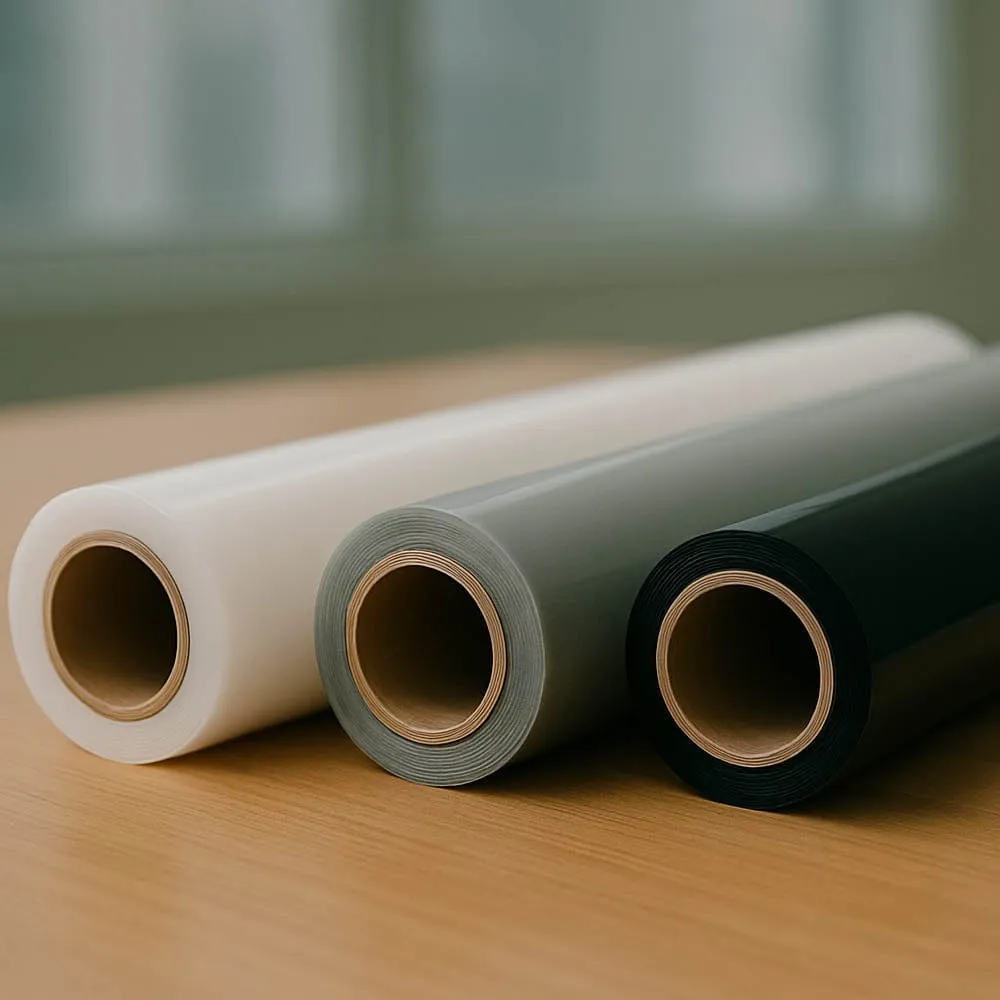
Planning an outdoor screen or LED installation?
Tell us about your site and audience. We scope, supply and support outdoor cinema and permanent LED systems Australia-wide.